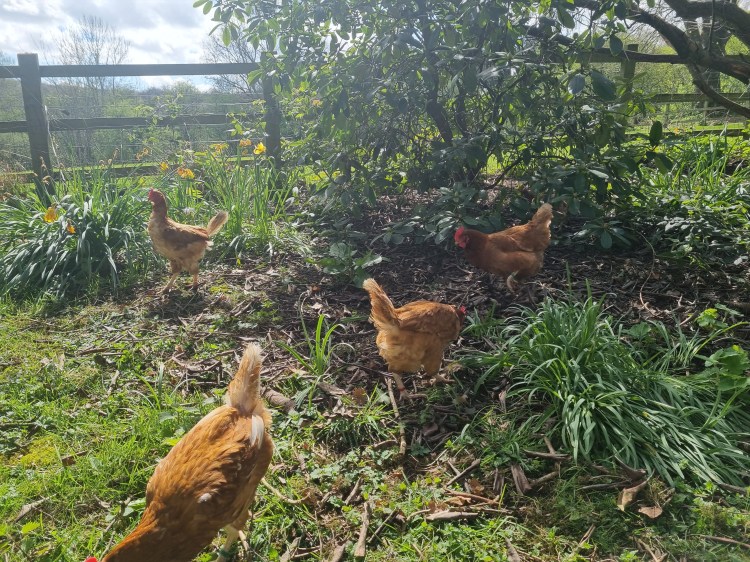
We regularly have little feathered visitors from next door, and the chickens are beautiful. Proper showstoppers. Bought as pullets at point of lay, they have a wide stretch of meadow to roam and a gorgeous stable to roost and nest in. They are well cared for, well fed, and genuinely want for nothing.
Our neighbours are lovely, and they do everything right.
And yet… their chickens are obsessed with ours.
Despite all that space and comfort, they spend a surprising amount of time trying to get into our run and coop. They hover at the edges, look for gaps, occasionally make a successful dash through the fence, and help themselves to food that is, quite clearly, not theirs. All of which goes down terribly with our girls, who are not known for their hospitality.
It is, on the face of it, a bit of a nuisance.
But the more I watch it, the more I think there is something in it.
Because those chickens are not escaping something bad. They are being drawn towards something else. Something about our setup, our routine, our little flock dynamic is appealing enough that they keep trying, even though they do not need to.
And that feels like a useful reminder.
In work, in leadership, in life more generally, there will always be people who look at what you have built and try to understand it, recreate it, or be part of it. Sometimes that can feel uncomfortable. It can trigger that instinct to protect, to hold things close, to worry about being copied or crowded.
But what if we looked at it differently?
What if, instead of seeing it as a threat, we saw it as a signal?
If people are paying attention, if they are curious, if they are trying to get closer to what you are doing, it usually means you are doing something right. You have created an environment, a culture, or a way of working that others find attractive.
That is not something to shut down.
It is something to be quietly proud of.
Of course, boundaries still matter. Our chickens are very clear on that point. Not everyone is welcome in the coop, and there are limits for a reason. But there is a difference between having boundaries and becoming guarded.
We do not have to gatekeep to succeed.
In fact, the best environments I have seen are the ones that are open in spirit. They share ideas, they support others, and they recognise that someone else doing well does not take anything away from them.
If anything, it raises the standard for everyone.
So now, when I see the neighbour’s chickens hovering at the fence line, plotting their next attempt to break in, I try not to be too irritated.
I take it, instead, as a bit of an unexpected compliment.
They could be anywhere. And they have chosen here.
Together, we rise.

