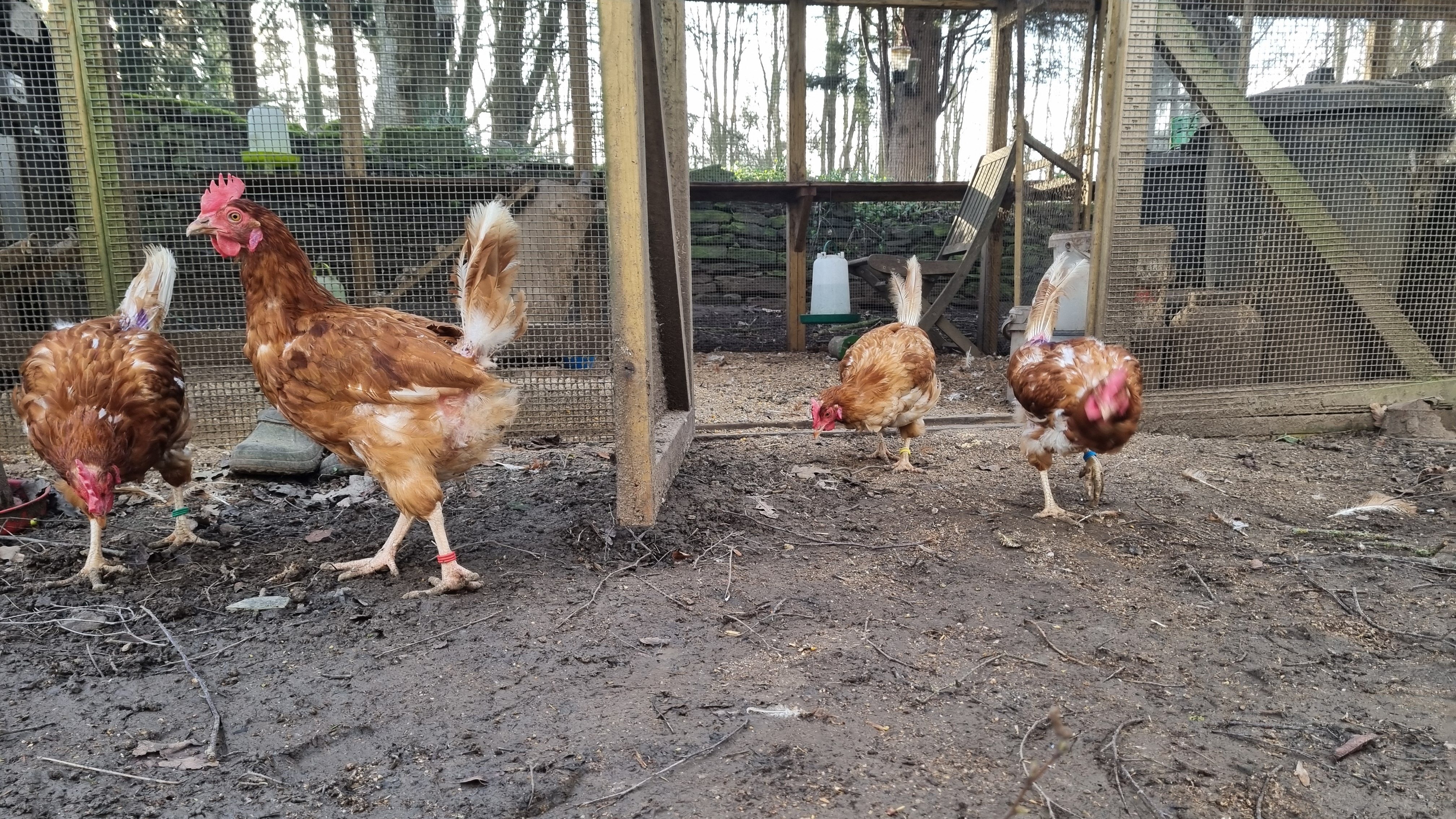
Today was a big day at Cluckingham Palace. The youngest girls ventured out for the very first time.
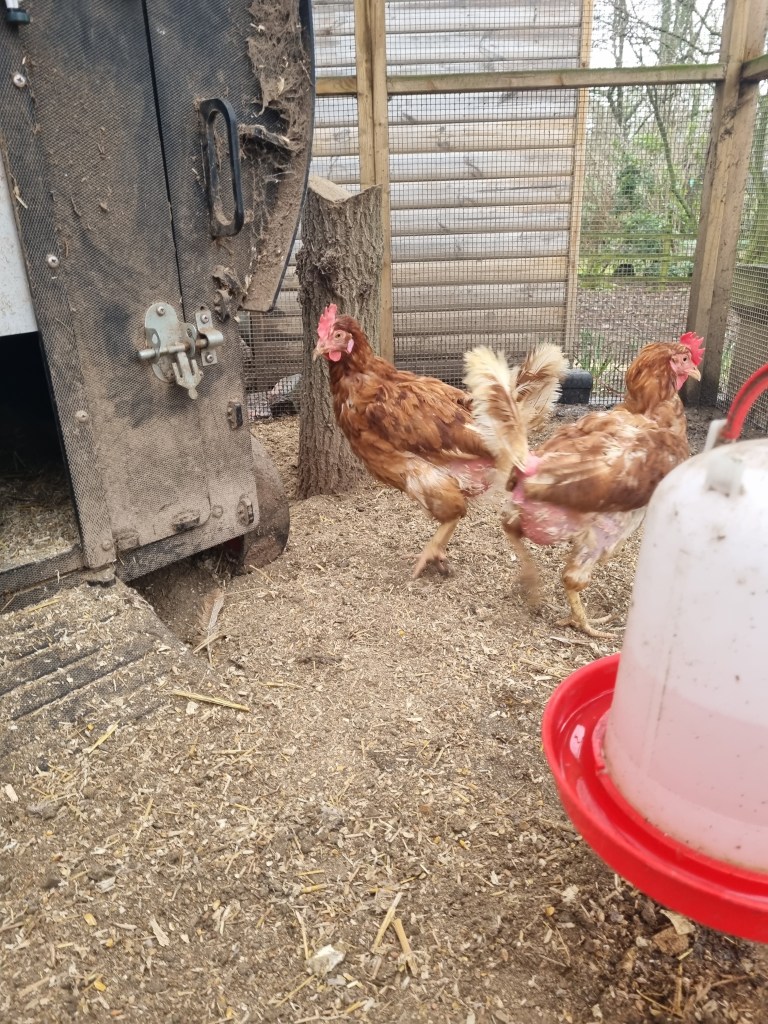
Venus didn’t hesitate. She marched straight out like she owned the place and immediately tried to join the older hens. Unfortunately, the big girls – particularly Ems and Sapphy – were not entirely thrilled with this bold career move. What followed could politely be described as “a lively debate about hierarchy.”
Aphrodite and Freya took a different approach. They stayed together, scratching quietly in the dirt and keeping a careful eye on everything around them. Close enough to explore, cautious enough not to attract too much attention.
Ishtar had yet another strategy. She stayed very close to the safety of the run, watching the others carefully, too wary to wander far in search of food and constantly scanning for danger.
Four chickens. Four completely different responses to the exact same situation. And that’s the thing about bravery.
We often celebrate the “Venus” approach to life: bold, confident, straight into the action. It’s the kind of courage people notice.
But bravery doesn’t only look like charging into the middle of things.
Sometimes bravery looks like Aphrodite and Freya quietly figuring things out together. Learning, observing, building confidence step by step.
Sometimes bravery looks like Ishtar, staying close to what feels safe while she works out whether the world outside is ready for her, or whether she’s ready for it.
Each one is navigating the same new world in her own way. Courage isn’t a single personality type. It isn’t always loud, fast, or fearless. Sometimes courage is charging forward. Sometimes it’s exploring carefully. Sometimes it’s watching and waiting until the moment feels right.
And occasionally courage is surviving a run-in with Ems and Sapphy and still coming back tomorrow.
The new girls – The Valentine Crew – arrived on Valentine’s Day.
My lovely husband drove over an hour each way to collect them from Harrogate. Their day had started much earlier. They’d left an organic farm in Wiltshire at 8am, travelled for eight hours, then been checked over before making the final journey home.
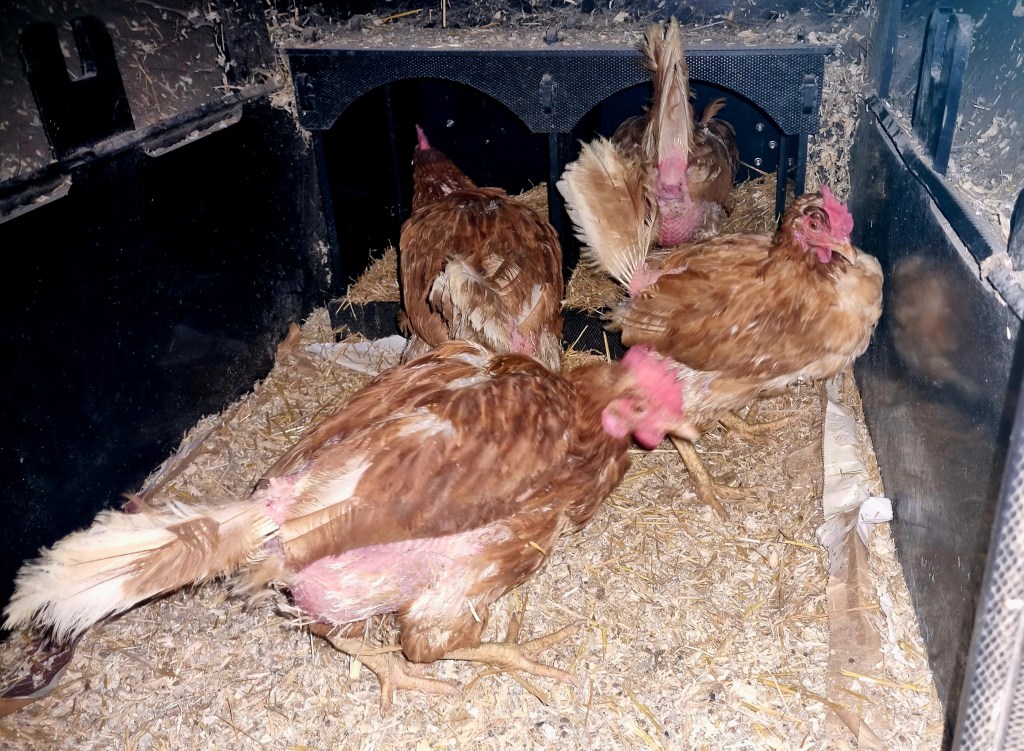
By the time they arrived, it was dark. No fanfare. No soft-focus welcome moment. Just straight into their coop with plenty of straw and a quiet night to recover.
This morning they stepped out.
They all came from the same farm, but when you consider there were at least 30,000 hens there, it’s unlikely they knew one another. In the space of 24 hours they’ve lost the only system they understood — the sounds, the rhythms, the hierarchy, the familiarity.
They are nervous. Skittish. On high alert.
And yet, their combs are bright red. They’re better feathered than most when they arrive. Physically, they’re well.
Emotionally? It’s another story.
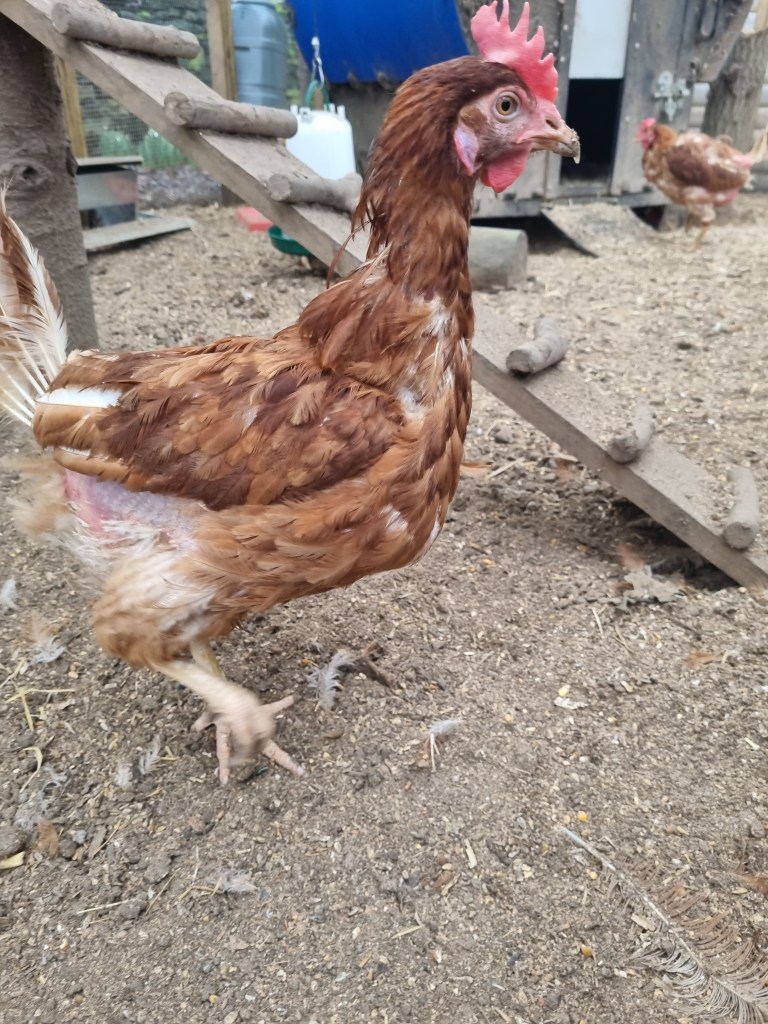
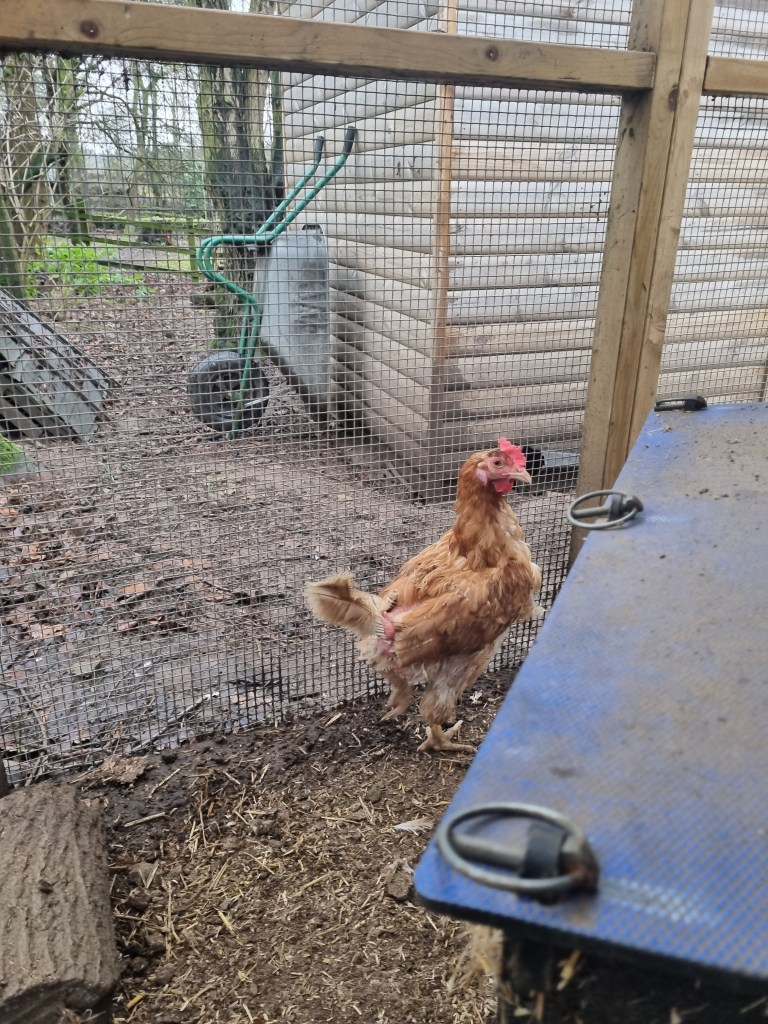
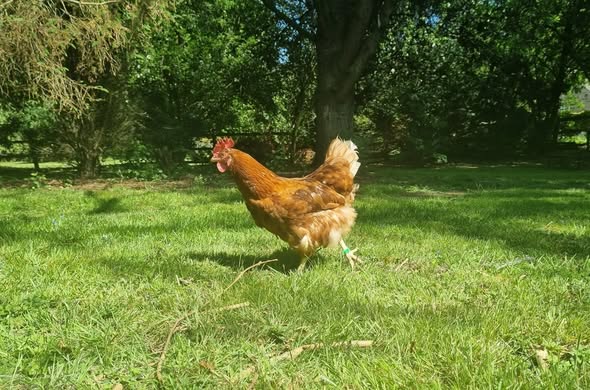
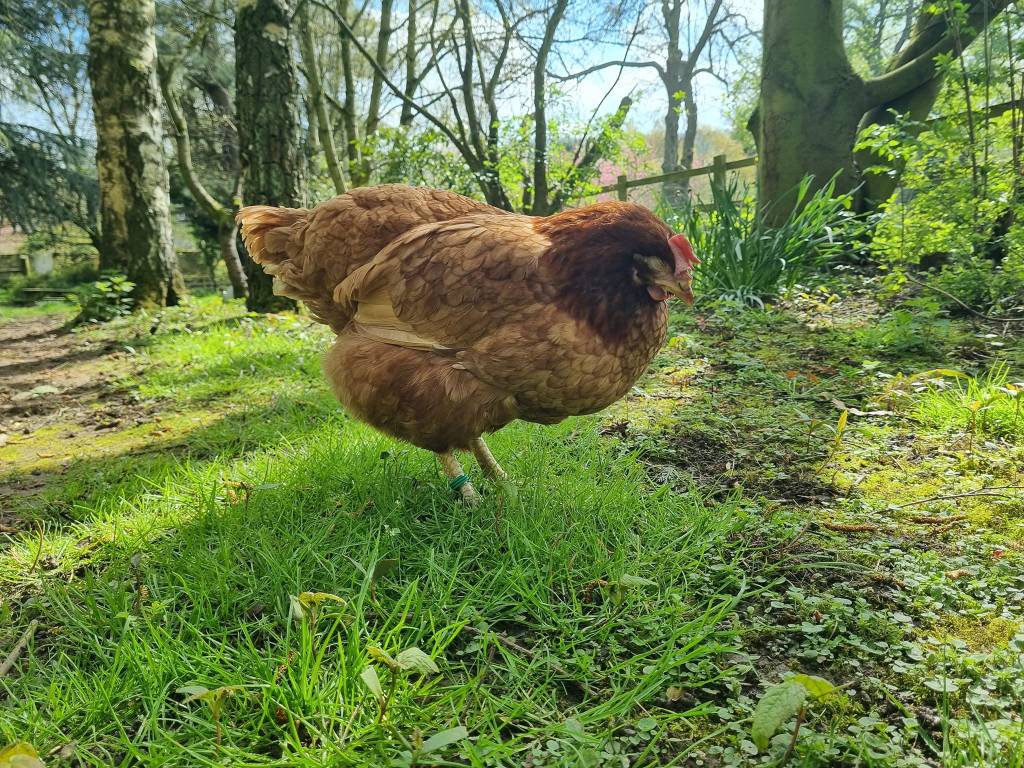
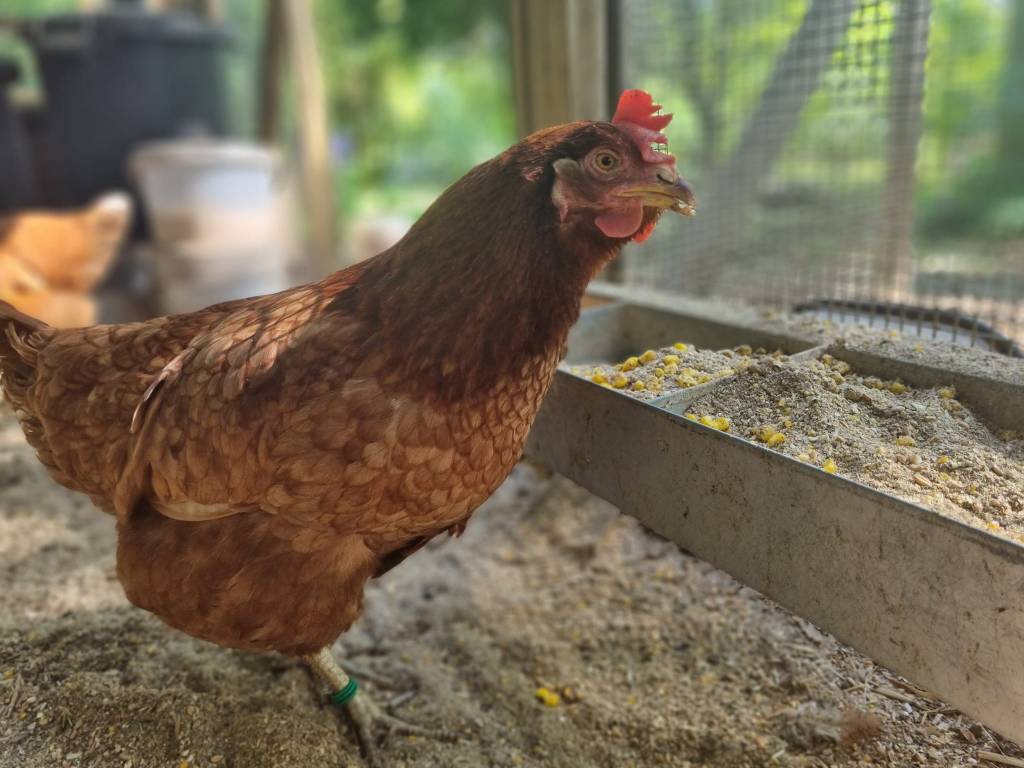
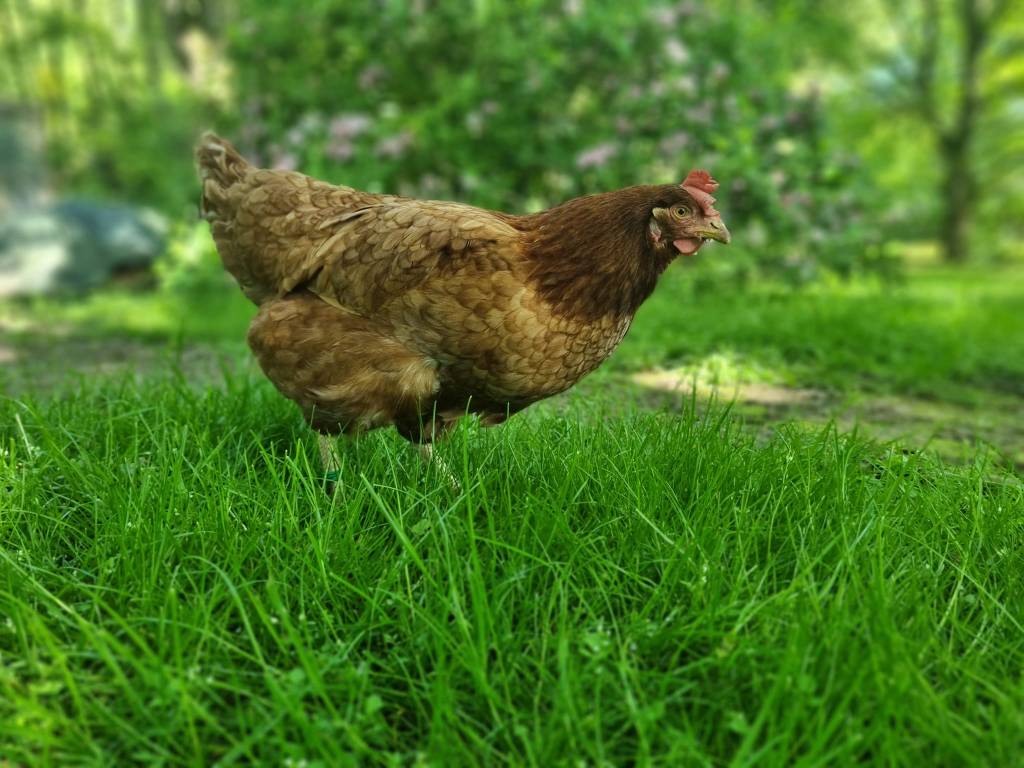
Venus is the bravest — first to take a few tentative steps down the ramp. Aphrodite has already found the food (some instincts override fear). Freya is studying the existing flock through the wire, assessing the politics. Ishtar is firmly positioned behind the coop, observing from what feels like safety.
Same environment. Same opportunity. Four completely different responses.
They don’t know they’ve been saved from slaughter. They don’t know this is a softer landing than the one they were heading toward. They don’t understand intention. They only know that everything familiar has disappeared.
There’s a temptation, when you rehome hens, to scoop them up and cuddle them — to expect some sort of visible gratitude. As if they should recognise they’ve been rescued.
But they don’t.
They’re not ungrateful. They’re overwhelmed.
And that feels like a useful reminder.
Change — even positive change — is destabilising. A promotion. A restructure. A new team. Growth in a business. A shift in direction. Even something longed for can knock the wind out of you.
From the outside it might look like an upgrade.
From the inside, it feels like loss of certainty.
We’re often too quick to interpret people’s reactions.
The one who charges forward is labelled confident. The one who heads straight for the “food” is practical. The one who studies quietly is cautious. The one who retreats is resistant.
But in truth, they’re all just regulating. Working out where they stand. Trying to feel safe.
My role with the Valentine Crew is simple. Provide food. Fresh water. Clean bedding. Protection from predators. And space.
Not constant handling. Not forced integration. Not expectation.
Space to decompress from a very stressful 24 hours — even if they don’t consciously know it was stressful.
Leadership is often exactly that.
Creating conditions. Holding steady. Resisting the urge to rush people through transition because we are comfortable with the change.
People don’t need to be told they’re lucky. They don’t need to perform gratitude. They need time to find their footing.
By lunchtime, Venus will likely be exploring further. Aphrodite will have eaten twice. Freya will be closer to negotiating flock politics. Ishtar will edge out when she’s ready.
They will settle.
Not because they’ve been lectured or lifted or labelled.
But because the environment is consistent and calm.
Change is hard. Even when it’s ultimately better. Especially when it’s sudden.
Sometimes the kindest, strongest thing we can do — whether with hens or humans — is provide safety, meet the basics, and let adjustment happen at its own pace.
Since Princess Layer passed away, we’ve been trying to integrate Pumpkin back into the flock.
On paper, this should be simple. Pumpkin is by far my largest hen, now the oldest with Princess gone, and she has seriously scary spurs that appeared rather suddenly years ago. By all the usual rules of flock dynamics, she should step neatly into the leadership role. The obvious successor. The natural boss.
Except… that’s not really how it’s working out.
Before going any further, it’s probably worth reviewing our current – and rather depleted – flock.
We have Pumpkin, one of the Halloween birds, the biggest and oldest girl. Then there are the gemstones: Emerald (Ems) and Sapphire (Sapphy), who arrived with their sisters on the morning of the Black Diamonds Ball a couple of years ago. Diamond lasted less than 24 hours, and Ruby flew over the rainbow bridge about six months ago.
The newest arrivals are the Powerpuffs – Blossom, Bubbles and Buttercup – who joined us at the end of last summer.
So we’re down to six. In between, we’ve lost all the authors and the Greek goddesses. A lot of history, a lot of personalities, and more than a few reshuffles along the way.
Back to Pumpkin.
She’s fully in with the girls all day now, scratching, dust bathing, and generally pottering about. But every evening, without fail, she takes herself off to the coop she shared with Princess. She isn’t asserting herself as leader. She isn’t marshalling the others or staking out prime territory. In fact, she’s actively nervous around Bubbles and Buttercup, who are smaller, younger, and far more confident than she is.
At first glance, it looks like she’s failing to step up.
But that’s only if you assume there’s one role she should be filling.
What I’ve noticed instead is that Pumpkin is continuing the role she played when Princess was alive.
Because Princess was blind, Pumpkin became her quiet carer. She would gently groom her, pecking away bits of food stuck to Princess’s beak, tidying the feathers around her face and neck. It was never showy or dominant. It was calm, deliberate, and deeply attentive.
And now, that instinct hasn’t gone anywhere.
Sapphy isn’t well at the moment. She’s a little slower than usual, and her comb is slightly darker than it should be. Earlier today, as I was feeding them and trying to make sure Sapphy got her fair share, Pumpkin appeared beside her. When a piece of corn stuck awkwardly on Sapphy’s head, Pumpkin gently leaned in and carefully removed it.
No fuss. No posturing. Just quiet care.
It’s become clear that Pumpkin has decided she’s the nurse of the group. The watcher. The one who notices when someone is struggling and steps in softly rather than loudly.
And honestly? She’s very, very good at it.
It made me think about how often we pigeonhole people – and ourselves – into roles based on age, experience, appearance, or assumed hierarchy. The biggest voice becomes the leader. The most senior person is expected to take charge. The one who looks the part is given the title.
But real group dynamics don’t work like flowcharts.
People, like hens, tend to gravitate towards the role that suits them best. Some lead from the front. Some stabilise from the middle. Some quietly hold everyone else together, noticing the details others miss.
Titles don’t always reflect contribution. And leadership doesn’t always look like dominance.
Pumpkin could force herself into a role that doesn’t fit her nature. She could try to be something she’s not. But instead, she’s chosen to keep doing what she does best – caring, watching, supporting. And the flock is better for it.
There’s a lesson in that, I think.
Not everyone is meant to be the boss. Not everyone wants the spotlight. And that doesn’t make them lesser. Often, it makes them essential.
Sometimes the most important role in the group is the one no one formally assigns — the one that simply feels right.
This week, we finally said farewell to Princess Layer, our oldest hen. Princess arrived pre-Covid, part of my very first batch of hens. From the start, she knew exactly who she was. She served as the perfect second-in-command to our Head Hen, Henrietta—the enforcer, the disciplinarian, the one who made sure everyone else stayed in line. A look here, a sharp peck there, and order was restored.
When Henrietta passed, Princess stepped seamlessly into leadership. She ruled with confidence, guarded her flock fiercely, and took her responsibilities seriously. Interlopers from next door were not welcome, especially if food was involved. This was her domain, and she made that very clear.
Princess lived life on her own terms. She hated being dictated to, and I quickly learned that persuasion worked far better than force. Calling her over and offering food was a much wiser approach than trying to pick her up and move her—Princess knew exactly how to use her beak and claws to make her feelings known. Independence wasn’t just part of her personality; it was her personality.
Processed with MOLDIV
At the ripe old age of eight, Princess went blind overnight. I truly thought that was the beginning of the end. Instead, it marked a surprising new chapter. For weeks, I hand-fed her, and in doing so, earned her trust completely. She accepted whatever I offered, calmly and without fuss.
We separated her from the main flock to keep her safe, but she wasn’t alone. Pumpkin, her best friend, stayed with her. Together, they adapted. Princess recovered remarkably well, bustling around with Pumpkin at her side, preening, pottering… and even continuing to lay eggs.
And then came her final day.
Almost her very last act was to lay an egg.
Right to the end, Princess did what she had always done. She showed up. She fulfilled her role. She lived fully, purposefully, and without surrendering to circumstance.
There’s something quietly powerful in that.
Princess Layer reminds us that purpose doesn’t disappear just because life changes. That keeping busy, staying engaged, and continuing to contribute, however that looks in each season of life, is a beautiful way to live. She didn’t give up when things became difficult. She adapted, trusted, and carried on being herself for as long as she could.
We should all be more Princess. Live life to the full. Keep going. Be who you are, right to the very end.
Sad news today. Little Athena chicken passed away quietly in the night. No warning. No visible signs of illness. She simply never woke up.
Those are the losses that hit the hardest — the ones you don’t see coming. Athena wasn’t demanding attention, wasn’t obviously unwell, wasn’t drawing concern to herself. She just was. And then, suddenly, she wasn’t.
In contrast, there’s Bunty.
Bunty has looked like she’s been on borrowed time for a while now. Her comb has turned purple, she’s slowed right down over the last couple of months, and for more than four weeks I’ve woken up each morning expecting that today would be the day we’d lose her. Every sign points to fragility.
And yet — every day — she gets up.
She still comes to find me, still waits patiently for her favourite dandelion leaves that I hand-feed her. She still has enough fire in her to give the other girls a firm peck if they encroach on her space. Bunty is visibly struggling, but she’s present. She shows you where she’s at. She accepts the care offered to her.
Athena didn’t.
And that’s the lesson that hurts the most.
It’s not always the ones who look like they’re falling apart that you need to worry about. When someone shows you they’re struggling, when they ask for help — or even quietly accept it — there’s still a line of connection there. There’s still a door open.
It’s the ones who suffer in silence that need watching most closely.
The quiet ones. The ones who don’t want to be a burden. The ones who keep going, keep showing up, keep saying “I’m fine” while carrying far more than anyone realises. They don’t make noise. They don’t wave red flags. And sometimes, like Athena, they leave without warning.
So if you have a friend who’s gone quiet… If someone who used to check in has stopped… If there’s a name that keeps drifting into your mind for no clear reason…
Pick up the phone. Send the message. Knock on the door.
They might not know how to ask. They might not even know what help they need. But knowing they’ve been noticed — that someone is paying attention — can matter more than we ever realise.
Cobweb has been ailing for quite some time now. She was always an inordinately hefty hen — solid, reassuringly weighty in the hand, the sort of bird you never worried about. Then, slowly, that changed.
After a couple of bouts of sour crop, the weight began to fall away from her. Shockingly fast. The hen who had once felt robust became almost weightless, light as a feather, and just as fragile. More worrying than her size was her spirit — she was clearly unhappy. Head down, tail down, withdrawn from the world around her, as though she’d already started to disappear.
There were moments that genuinely frightened us. A couple of times we talked seriously about calling the vet, and a couple of times we were convinced she’d gone altogether. We’d approach her and she would be utterly lifeless, so still that your heart would sink before she even stirred. Those are the moments that make you question everything — whether you’re doing enough, whether you’re doing the right thing, whether perseverance is kindness or cruelty.
But we kept going.
We hand-fed her when she didn’t have the strength to eat on her own. We bathed her, carefully and patiently, trying to bring her some comfort and relief. We watched, waited, hoped. Recovery, if it was coming at all, was painfully slow.
And then Andy noticed something we’d overlooked.
Cobweb wasn’t just struggling with illness — she was being bullied.
The bullying was persistent and targeted, and for a bird already weakened, it was devastating. Every attempt her body made to heal was being undermined by constant stress and attack. Once that behaviour was spotted, the decision was obvious. The worst culprits were separated so they could no longer get at her.
Almost immediately, things began to change.
Without the constant pressure, without the fear and harassment, little Cobs started to thrive. Her posture lifted. Her energy returned. The spark came back into her eyes. Given space, safety, and peace, her body finally had the chance to do what it had been trying to do all along — recover.
And that’s the part that matters.
Sometimes it isn’t weakness that breaks us. Sometimes it isn’t even illness. Sometimes it’s the environment we’re forced to exist in — the negativity, the criticism, the bullying that chips away at us until there’s nothing left to give.
So separate yourself from anyone who is not a positive influence in your life. You will thrive when you remove harmful people from your sphere. And if that separation can’t be done physically, then do it emotionally. Create distance. Protect yourself. You are allowed to disconnect in order to survive.
The photos say it all — Cobs when she was ill, head and tail down, looking utterly defeated. And Cobs now: a happy, healthy little bird.
Same hen. Different environment. Entirely different outcome.
Just catching up, this post is actually from summer 2023
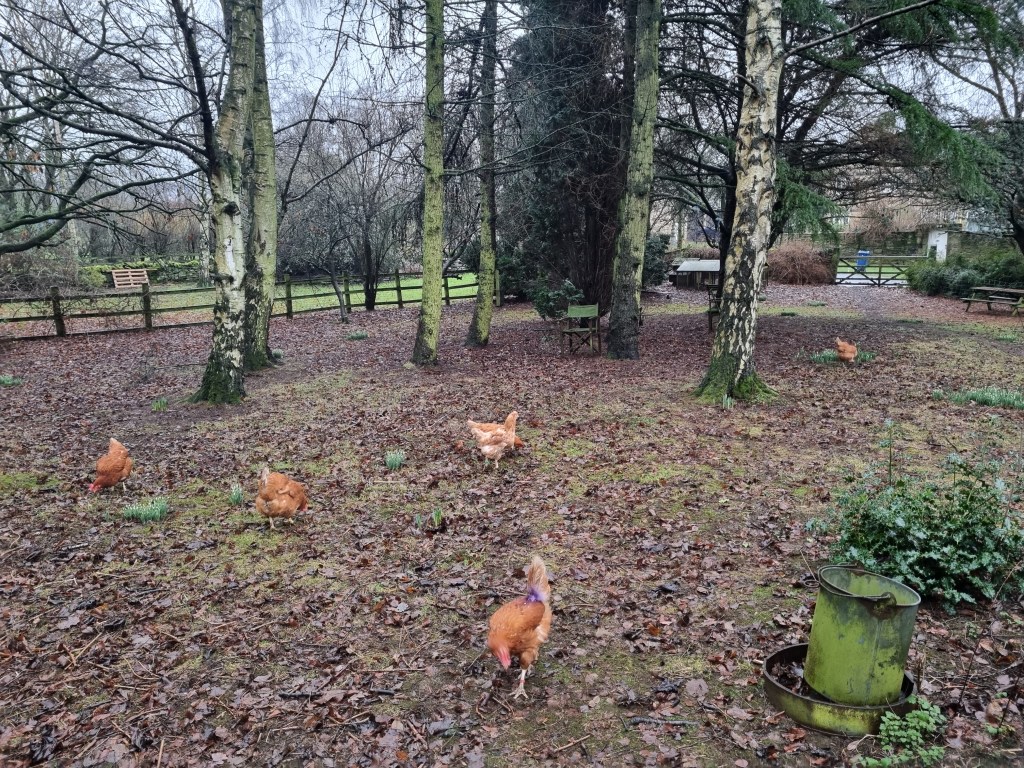
It’s a beautiful sunny summer Sunday morning here in Barnsley and the girls are out and about free ranging and sunbathing in the fresh air.
I have a very mixed flock now, only Princess Layer from the first girls, Holly and Mistletoe from the Berry birds, Kar-hen and Yolko Ono who arrived together from a lovely home who just couldn’t keep them, Boo, Cobweb and Pumpkin from last October and the new girls Eggatha, Dorothy and Jane.
All the girls arrive in a small group, which I keep together for a couple of weeks in isolation whilst they get used to life away from commercial intensive farming. (It also keeps from spreading any potential disease to the main flock). Even after many months all together as part of the main flock the girls will maintain these closer groups when they are out and about.
I know I can always find Mistletoe sticking close beside her much smaller, but more confident best friend Holly. And whilst Eggatha had her challenges with Dorothy and Jane, they cluster in a little group when grasing on the fresh summer grass.
The October girls have been best friends from day 1, never a cross word (squark?) between them, they are my 3 little Muskerhens.
Yolko-Ono and Kar-hen arrived already bonded together, and they are never apart, even snuggle up together in the coop at night, they have such a sweet relationship, they are just like sisters.
And Princess? Well she’s in charge, so keeps an eye on all her flock, but when she’s happy that they’re all okay, she comes and settles next to me.
Having a large friendship group is great, but having that small group of trusted friends you can rely on is absolutely priceless.
The new girls have been with us a few days, their combs are reddening up and they are starting to get use to their surroundings, but we’ve had a bit of an issue.
Little Eggatha is small and weak, she limps a bit and is very nervous. Dorothy, on the other hand, is large, strong and keen to assert her authority on the flock.
Poor Eggatha has been hiding in the nesting box away from the other and not coming out even for food and drink.
We have the ability to separate the flock, so Dorothy is spending her days in isolation, she can see the other girls, but not get to them.
The change in Eggatha has been immediate, she was happily pecking at the food with the other girls and wandering around investigating her new home within minutes of Dorothy being removed.
She’s not out of the woods, but she’s happy and feels safe which is a great start.
It’s really important to make sure you surround your self with people who are on your side and support you. Steer clear from toxic individuals who make you feel bad, life’s too short!
Cruella has had a few weeks in isolation getting over a very bad respiratory infection. I have to say, she hasn’t been the best of patients, she likes to be out and about, and particularly hates having liquid dropped down her throat, and is very vocal about it (luckily I have lovely neighbours).
But last week she told me she was feeling much better. How? By laying me an egg.
From the day she fell ill all her resources have been directed towards fighting the illness, she didn’t have anything spare to give to egg production.
As soon as her little body started to heal itself, naturally her egg production recommenced.
That’s how it should be, in order to provide for others you need to make sure you are in the best health possible. You can’t (and shouldn’t try to) pour from an empty cup. The least selfish thing you can do for your loved ones is to care for yourself.
Cruella is almost back to full strength now, certainly well enough to be back with her flock.
Its been a stressful couple of days here at Cluckingham Palace, on Monday morning we woke to a very ill hen. Poor Cruella was gasping for every breathe when I went to let the littles out of their coop.
A quick call to the vets and they could see her at lunchtime, so we isolated her from the others immediately and kept her as quiet as possible.
Thankfully we have caught a respiratory infection quickly. She’s separated from the others, but safe and warm, taking her medicine and seems to be on the road to recovery.
After a couple of days in the sick bay (giant dog crate in our garden) I let her out for a wander yesterday afternoon.
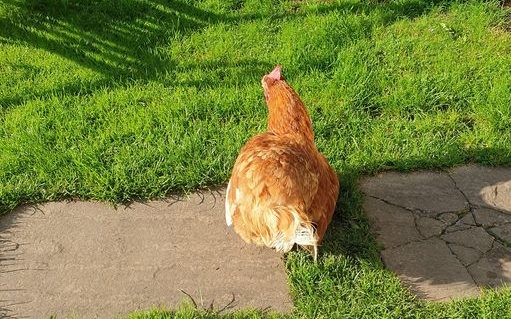
She immediately found a spot in the sun to do a bit of basking.
Even chickens know that the sun has healing properties, if you are feeling under the weather try and get out into the fresh air, sit with the sun on you face for a few minutes and drink it in.
 Chicken Nuggets